Hard-Boiled Eggs: Simple Cold-Start Method for Easy Peeling
A straightforward cold-start method for hard-boiled eggs that yields firm whites, fully set yolks, and easy peeling — great for breakfasts, salads, or make-ahead meal prep.
Nutrition Facts
Approximate, per servingAllergens
Disclaimer: This recipe contains or may contain the allergens listed above. Always check labels and consult ingredient sources.
Ingredients
- 8 count Large eggsuse cold from fridge or room-temperature eggs
- 6 cups Waterenough to cover eggs by about 1 inch
- 2 cups Icefor the ice bath
- 1 teaspoon Fine saltoptional; can make shells easier to peel
Instructions
Arrange the 8 large eggs in a single layer in a medium saucepan and pour in about 6 cups of cold water so the surface of the water sits roughly 1 inch above the eggs; stir in 1 teaspoon fine salt if using.
Chef’s tipLower eggs into the pan with a spoon if they’re straight from the fridge to avoid cracking from sudden contact with the pan.
Set the pan over high heat and bring the water to a rolling boil, uncovered, where vigorous bubbles break across the entire surface.
Chef’s tipA rolling boil is noticeably vigorous; once you see it, move straight to the next step so timing stays accurate.
Remove the pan from the heat as soon as the water reaches a rolling boil, cover it with a tight-fitting lid, and let the eggs sit, covered, for 12 minutes to reach fully set yolks (for large eggs).
Chef’s tipKeep the lid on for the full 12 minutes to trap residual heat for even cooking; do not return the pan to the burner.
While the eggs steep, prepare an ice bath by combining about 2 cups of ice with cold tap water in a large bowl until it’s roughly three-quarters full.
Chef’s tipUse enough water so eggs can be fully submerged — this ensures rapid cooling and stops carryover cooking.
After 12 minutes, transfer the eggs with a slotted spoon into the ice bath and let them chill for at least 5 minutes to cool through and firm the whites and yolks.
Chef’s tipLeave eggs in the ice bath longer if you’re not peeling them immediately; fully cooled eggs are easier to handle and peel.
To peel, tap an egg on a hard surface to crack the shell, roll it to create many small cracks, then peel the shell away while holding the egg under running water, beginning at the wider end where the air pocket commonly helps separate the membrane.
Chef’s tipPeeling under running water lets a thin stream slip under the membrane and makes shells come off in larger pieces.
Doneness check: the whites should be completely set and opaque; yolks should be firm throughout with no liquid or glossy center. Discard any eggs that emit an unusual odor or show abnormal color or texture.
Storage: refrigerate hard-boiled eggs in their shells in a covered container for up to 1 week; if peeled, keep in a sealed container and use within 3–5 days. Refrigerate cooked eggs within 2 hours of finishing.
Chef’s tipLabel the container with the preparation date to keep track of the one-week shelf life.
Reheating (optional): to warm peeled eggs, place them in a heatproof bowl and pour hot (not boiling) water over them for 3–5 minutes, then drain and serve immediately. Do not microwave whole hard-boiled eggs.
Chef’s tipShort warming in hot water keeps the texture even; avoid overheating to prevent a rubbery white.
This method produces consistently firm whites and fully set yolks while making the shells easier to remove. Eggs are placed in cold water, brought to a brisk boil, then removed from heat and left covered to finish cooking gently; an ice bath halts the carryover cooking so yolks stay firm and peeling is simpler. The recipe is convenient for preparing a batch ahead for breakfasts, sandwiches, or salads, and keeps well refrigerated. Storage and reheating notes are included so you can plan make-ahead meals or warm peeled eggs briefly before serving without overcooking.
Related Eggs lovers Recipes
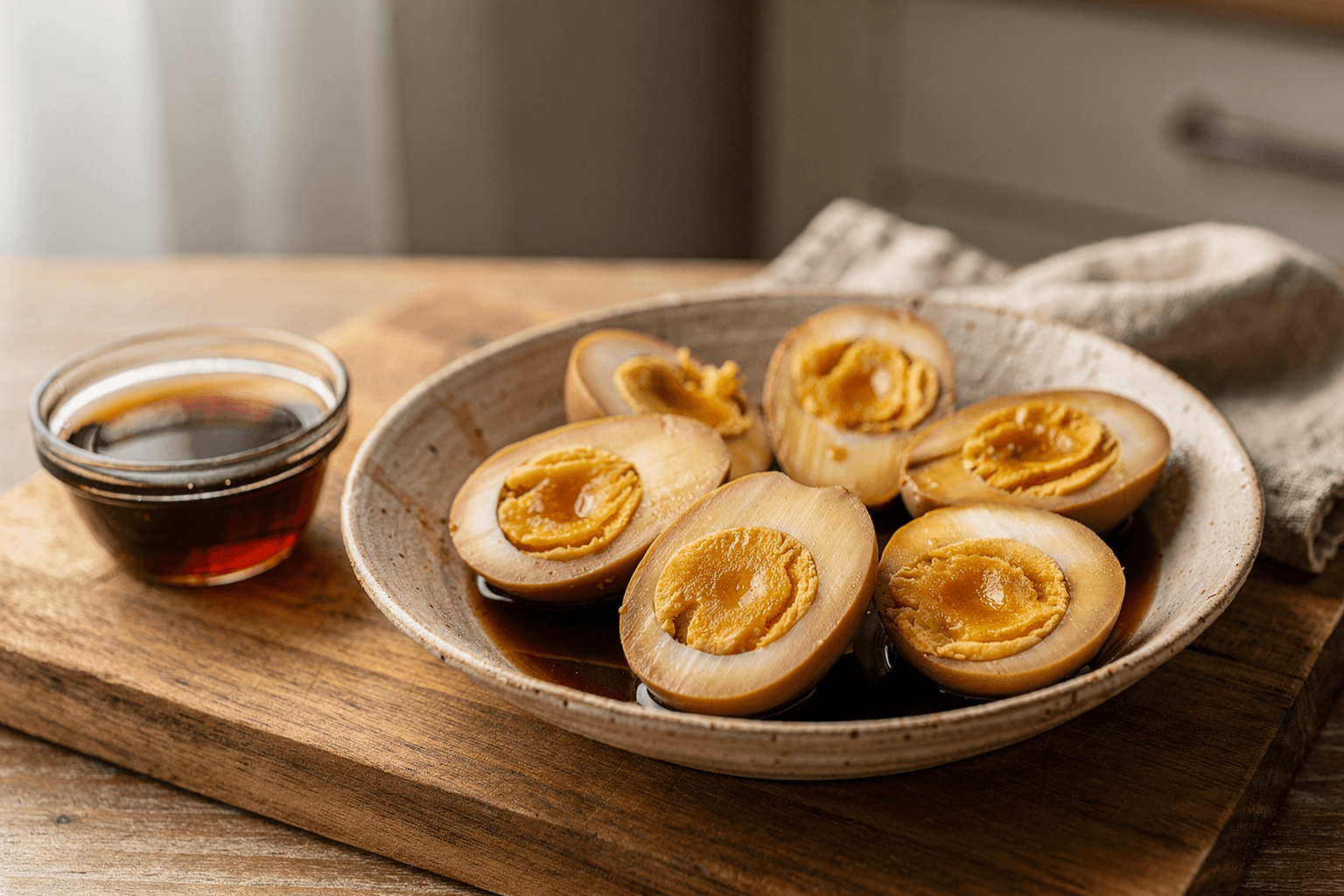
Soy Sauce Eggs (Shoyu Tamago): Ramen-Style Marinated Eggs
Shoyu Tamago are soft-boiled eggs soaked in a sweet-salty soy marinade that add a savory, jammy bite to ramen or grain bowls and can be made ahead.
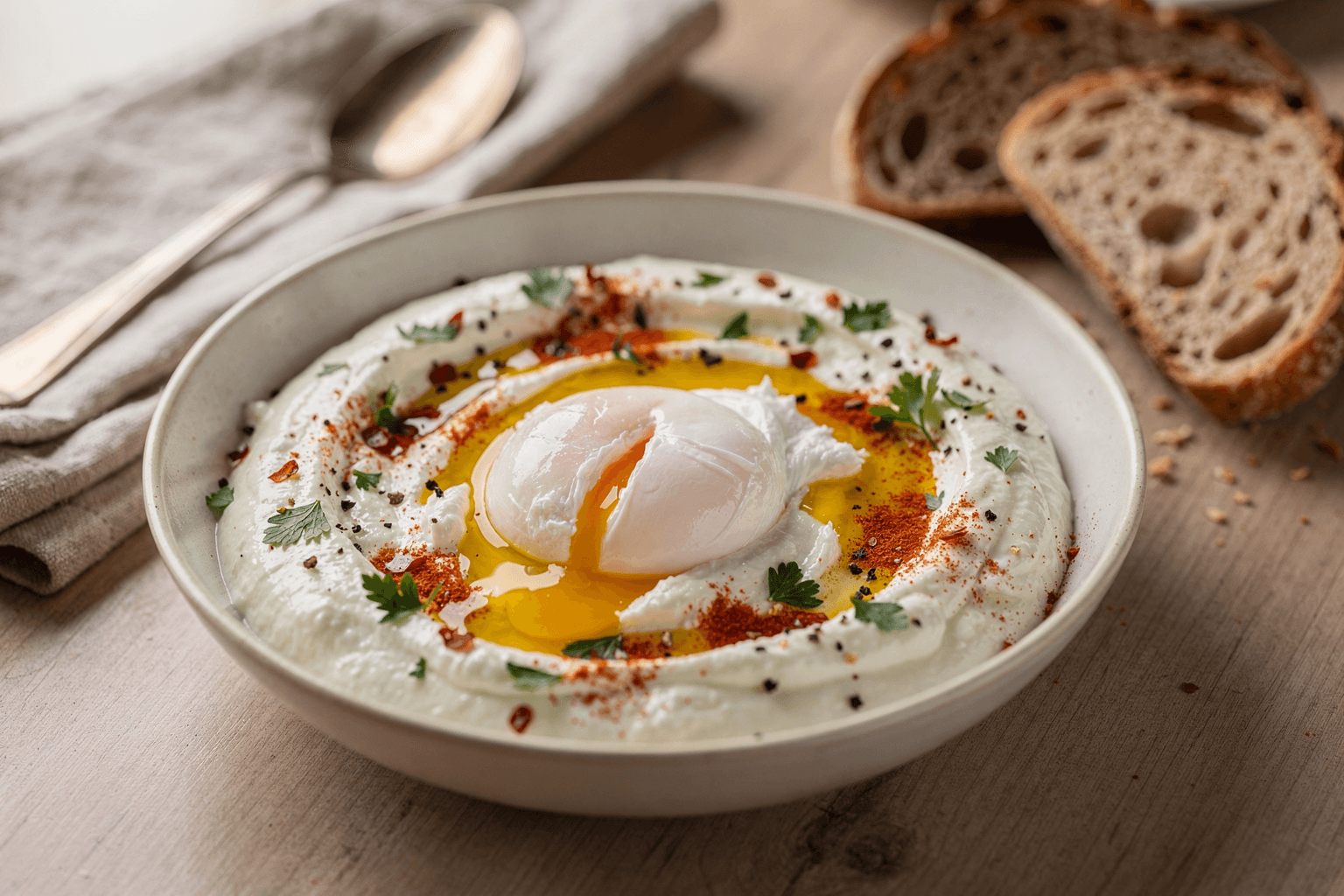
Turkish Eggs (Çılbır): Poached Eggs on Garlic Yogurt with Chili Butter
Turkish Eggs (Çılbır) are poached eggs served on tangy garlicky yogurt and finished with a sizzling chili butter—an easy, bold brunch for four.

Shakshuka: One-Pan Baked Eggs with Feta
Shakshuka of spiced tomato and pepper sauce with oven-baked eggs, tangy crumbled feta, and fresh parsley — a hearty one-skillet meal for four.